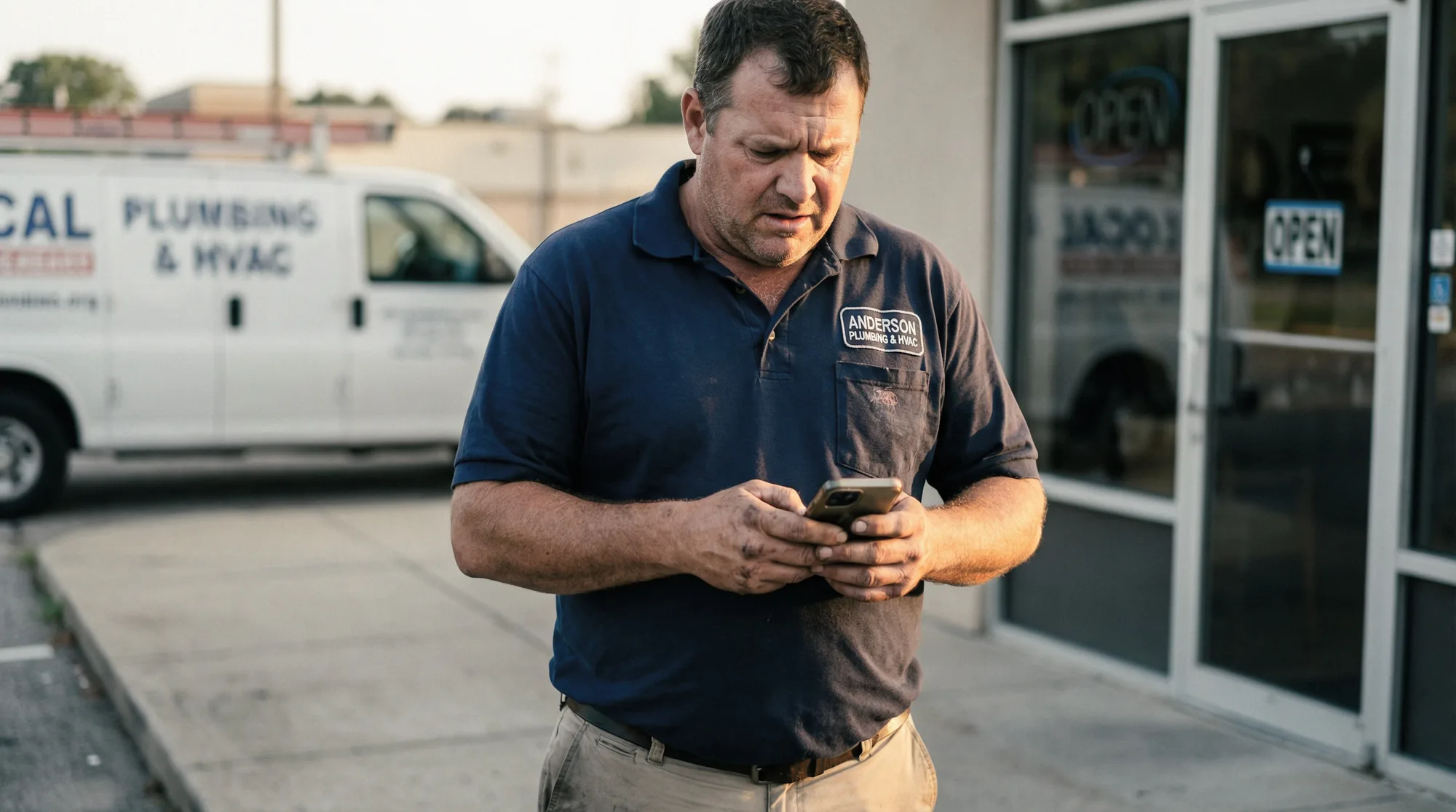
It is not the game anymore
Google now answers questions directly on the search results page. When someone searches "do I need a permit for a deck in Massachusetts," Google generates an answer using AI and displays it at the top of the page. The customer reads the answer, gets what they need, and never visits a single website. The businesses that would have received that click get nothing.
This is not a prediction. It is already happening.
More than half of all Google searches end without a click
Semrush analyzed billions of search queries [1] in 2024 and found that 58.5% of Google searches in the United States ended without the user clicking on any result. In the EU, it was 59.7%. The user searched, got their answer from Google directly, and left.
For local businesses, this number is likely higher. Local queries ("hours," "phone number," "directions," "does this place do X") are exactly the type of questions Google answers without requiring a click. Your Google Business Profile, not your website, is now the first thing most customers interact with.
AI is now a discovery channel for local businesses
Google is not the only place customers look anymore. BrightLocal's 2026 Local Consumer Review Survey [2] found that AI tools like ChatGPT have surged to third place as a discovery channel for local businesses, behind only Google and Facebook. Customers are asking ChatGPT "what is the best accountant in Andover" or "who does custom decks in the Merrimack Valley" and getting answers that may or may not include your business.
97% of consumers [3] still read online reviews before choosing a local business. The average consumer checks six different review sites before making a decision. Your reputation is no longer centralized on one platform. It is scattered across Google, Yelp, Facebook, industry-specific directories, and now AI tools that aggregate all of them.
What this actually means for your business
The website is not dead. But the website alone is no longer sufficient.
Five years ago, a local business could build a decent website, put their phone number on it, and wait for Google to send customers. That worked because Google's job was to send people to websites. Google's job has changed. Google now wants to answer the question itself, on its own page, using your data. If Google can pull your hours, your services, your reviews, and your location from your Business Profile and structured data, it will show that information directly in the search results. The customer never needs to visit your site.
This means the businesses that will win local search in 2026 and beyond are the ones that feed Google (and AI tools) the right information in the right format, everywhere.
What to do about it
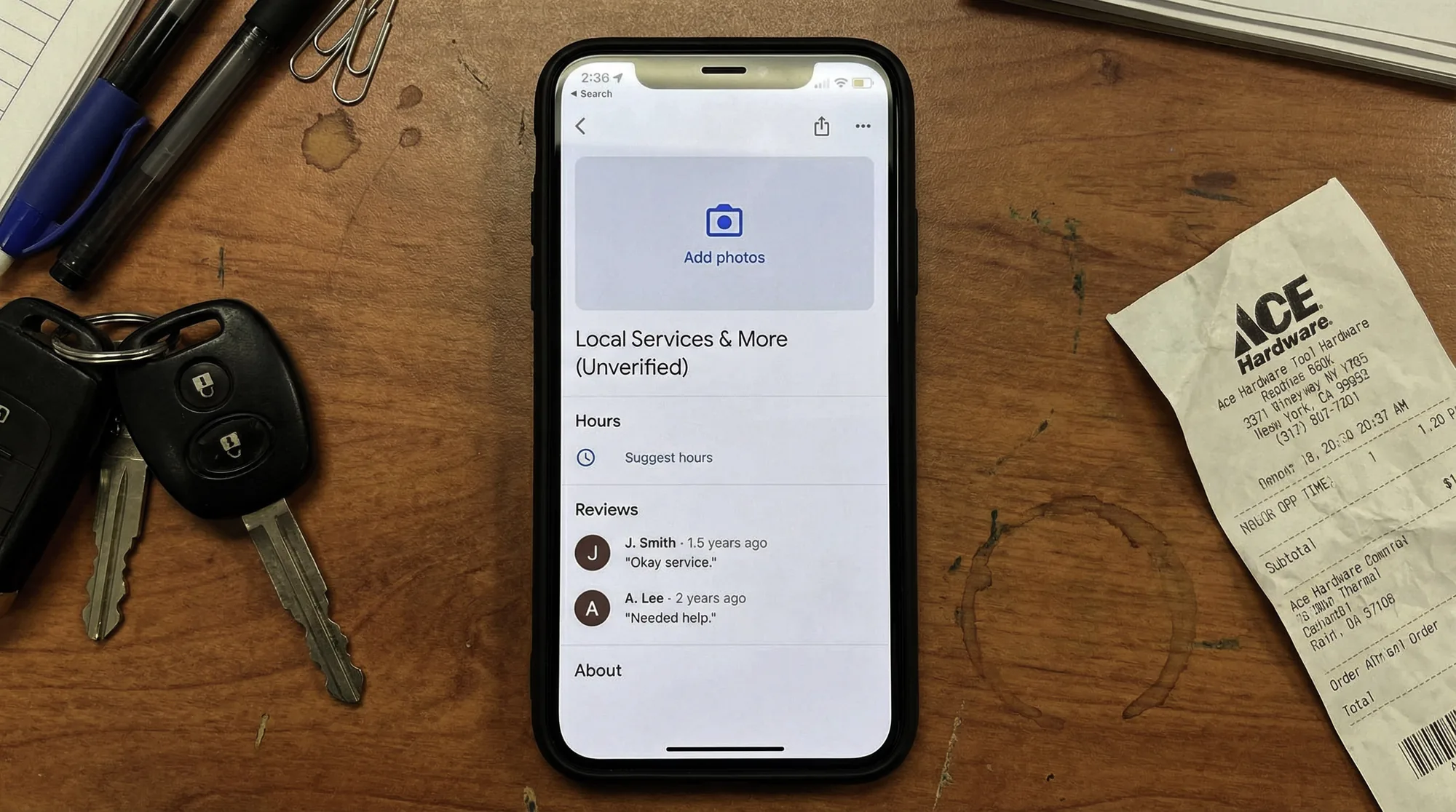
1. Your Google Business Profile matters more than your website
This is the single most important digital asset for a local business right now. It powers the map results, it feeds AI Overviews, and it is the first thing 83% of customers check [4] after hearing about you from someone else.
Make sure yours is complete. Not "has a phone number and address" complete.
Actually complete:
- Correct business hours (check them right now, incorrect hours actively turn customers away)
- Every service you offer listed individually
- 20+ high-quality photos
- A full business description with the words customers actually search for
- Posts at least once a week (Google deprioritizes inactive profiles)
- Questions and answers pre-populated with the things customers ask you every day
If you do nothing else from this article, fix your Google Business Profile this week. It is free and it has a bigger impact on whether customers find you than anything else on this list.
2. Reviews are your new homepage
92% of B2B buyers [5] are more likely to purchase after reading trusted reviews. Companies with 25 or more reviews see 108% more revenue than those without. 73% of consumers only pay attention to reviews from the last 30 days.
This means a business with 150 reviews from three years ago is losing to a business with 40 reviews from the last six months. Volume matters. Recency matters more.
If you are not actively asking every customer for a review after every transaction, you are falling behind competitors who are. A simple system works: send a follow-up email or text 24 to 48 hours after the service with a direct link to your Google review page. That is it. No complicated software required.
3. Your website needs to answer questions, not just list services
Google's AI pulls answers from websites that directly answer specific questions. If your website says "We offer plumbing services" and nothing else, Google has nothing to work with. If your website has a page that answers "How much does it cost to replace a water heater in Massachusetts?" with a real, detailed answer, Google may feature that answer in AI Overviews and send traffic to your site even in the zero-click era.
Write content that answers the exact questions your customers ask you on the phone every week. You already know what those questions are. Put the answers on your website.
4. Be consistent everywhere
AI tools aggregate information from across the web. If your business name, address, phone number, hours, or service descriptions are different on Google versus Yelp versus Facebook versus your website, you are sending conflicting signals. AI systems trust consistent data. Inconsistent data gets deprioritized or ignored.
Pick a canonical version of every piece of business information and make sure it is identical on every platform where your business appears.
The shift is structural, not temporary
This is not a trend that will reverse. Google is not going to stop showing AI answers. ChatGPT is not going to stop recommending local businesses. The percentage of zero-click searches is going to keep increasing.
The businesses that adapt will be the ones that treat their online presence as a system rather than a single website. Google Business Profile, reviews, structured data, consistent information across platforms, and content that directly answers customer questions. These are the building blocks now.
The good news is that most of your competitors have not adapted either. The local businesses that move first on this will have a significant advantage for years, because the businesses that wait will be increasingly invisible in the results that matter.